Running a restaurant, café, hotel kitchen, or food preparation business requires more than just serving quality food. Cleanliness plays a critical role in maintaining food safety, protecting staff and customers, and meeting Australian health regulations. While many commercial kitchens follow a daily cleaning routine, regular cleaning alone is not enough to keep a kitchen hygienic and compliant over the long term.
This is where commercial kitchen deep cleaning becomes essential. Professional providers like Deep Commercial Cleaning help restaurants and hospitality businesses maintain higher hygiene standards through specialised cleaning solutions.
Many business owners confuse regular kitchen cleaning with deep cleaning, assuming both deliver the same results. In reality, they serve very different purposes. Understanding the difference between the two can help restaurant owners maintain safer kitchens, avoid costly repairs, and improve overall operational efficiency.
What Is Regular Commercial Kitchen Cleaning?
Regular commercial kitchen cleaning refers to the routine cleaning tasks performed daily, weekly, or during shifts to keep the kitchen functional and visually clean.
These tasks are usually handled by kitchen staff as part of standard workplace hygiene practices.
Common Regular Cleaning Tasks
Regular cleaning often includes:
- Wiping down benches and preparation surfaces
- Sweeping and mopping floors
- Cleaning stovetops and splashbacks
- Washing dishes, utensils, and cookware
- Emptying rubbish bins
- Sanitising food preparation areas
- Cleaning spills and grease build-up on visible surfaces
- Basic cleaning of kitchen equipment
The primary goal of regular cleaning is to maintain day-to-day hygiene and reduce immediate contamination risks.
Melbourne’s Trusted Commercial Kitchen Cleaning Experts
CONTACT US TODAYLimitations of Regular Kitchen Cleaning
Although regular cleaning is essential, it typically focuses only on visible dirt and frequently used surfaces. Over time, grease, carbon, bacteria, and food residue accumulate in hard-to-reach areas that are often overlooked during daily cleaning routines.
These hidden contaminants can create serious problems, including:
- Increased fire hazards from grease build-up
- Unpleasant odours
- Reduced equipment efficiency
- Pest infestations
- Health code violations
- Cross-contamination risks
- Shortened lifespan of kitchen equipment
Without professional deep cleaning, even a kitchen that appears clean may still contain harmful bacteria and hidden grease deposits.
What Is Commercial Kitchen Deep Cleaning?
Commercial kitchen deep cleaning is a specialised and comprehensive cleaning process designed to remove built-up grease, grime, bacteria, and contaminants from all areas of a commercial kitchen — including areas that are difficult to access during regular cleaning.
Deep cleaning is usually performed by professional commercial cleaners with specialised equipment, degreasers, and industry expertise.
Unlike regular cleaning, deep cleaning targets every part of the kitchen, including hidden and neglected areas.
Areas Covered During Deep Cleaning
A professional commercial kitchen deep clean may include:
- Exhaust hood and canopy cleaning
- Duct and ventilation cleaning
- Deep degreasing of cooking equipment
- Cleaning behind and underneath appliances
- Wall, ceiling, and tile cleaning
- Floor scrubbing and grease removal
- Drain cleaning and sanitisation
- Cool room and freezer cleaning
- High-pressure cleaning of stubborn grease build-up
- Sanitisation of food-contact surfaces
- Cleaning of filters and extraction systems
The objective is to restore the kitchen to a hygienic, safe, and fully sanitised condition.
Key Differences Between Regular Cleaning and Deep Cleaning
Understanding the major differences between these two cleaning methods helps businesses create a more effective cleaning strategy.
| Feature | Regular Cleaning | Commercial Kitchen Deep Cleaning |
| Frequency | Daily or weekly | Monthly, quarterly, or scheduled |
| Purpose | Maintain surface cleanliness | Remove deep grease, grime, and bacteria |
| Performed By | Kitchen staff | Professional commercial cleaners |
| Areas Cleaned | Visible and accessible surfaces | Entire kitchen including hidden areas |
| Equipment Used | Basic cleaning tools | Industrial-grade cleaning equipment |
| Results | Short-term cleanliness | Thorough sanitisation and compliance |
| Fire Risk Reduction | Limited | Significant |
| Compliance Support | Basic hygiene maintenance | Supports health and safety compliance |
Why Deep Cleaning Matters for Commercial Kitchens
Commercial kitchens operate in high-pressure environments where grease, moisture, heat, and food waste are constantly present. Without periodic deep cleaning, contaminants can quickly accumulate and create operational and safety risks.
1. Improves Food Safety
Food safety is one of the biggest concerns for restaurants and hospitality businesses. Deep cleaning removes hidden bacteria, mould, and grease that regular cleaning may miss.
A cleaner kitchen reduces the risk of:
- Food contamination
- Foodborne illnesses
- Cross-contamination
- Health inspection failures
This helps businesses maintain a safe environment for both staff and customers.
2. Reduces Fire Hazards
Grease build-up inside exhaust systems, canopies, ducts, and cooking equipment is a major fire risk in commercial kitchens.
Professional deep cleaning removes flammable grease deposits from hard-to-reach areas, helping reduce the likelihood of kitchen fires.
3. Extends Equipment Lifespan
Commercial kitchen equipment is expensive to repair and replace. Grease and grime accumulation can reduce efficiency and place unnecessary strain on appliances.
Regular deep cleaning helps maintain:
- Ovens
- Fryers
- Range hoods
- Exhaust systems
- Refrigeration units
- Cooking surfaces
Clean equipment generally performs better and lasts longer.
4. Supports Health and Safety Compliance
Australian food businesses must comply with strict health and safety regulations. Professional deep cleaning helps kitchens meet hygiene standards and prepares businesses for inspections.
Failure to maintain proper cleanliness can lead to:
- Fines
- Temporary closure
- Negative customer reviews
- Reputation damage
5. Creates a Better Working Environment
A clean kitchen improves staff morale, workplace safety, and operational efficiency.
Deep cleaning helps eliminate:
- Slippery grease build-up
- Unpleasant odours
- Smoke residue
- Poor air quality
This creates a safer and more comfortable environment for employees.
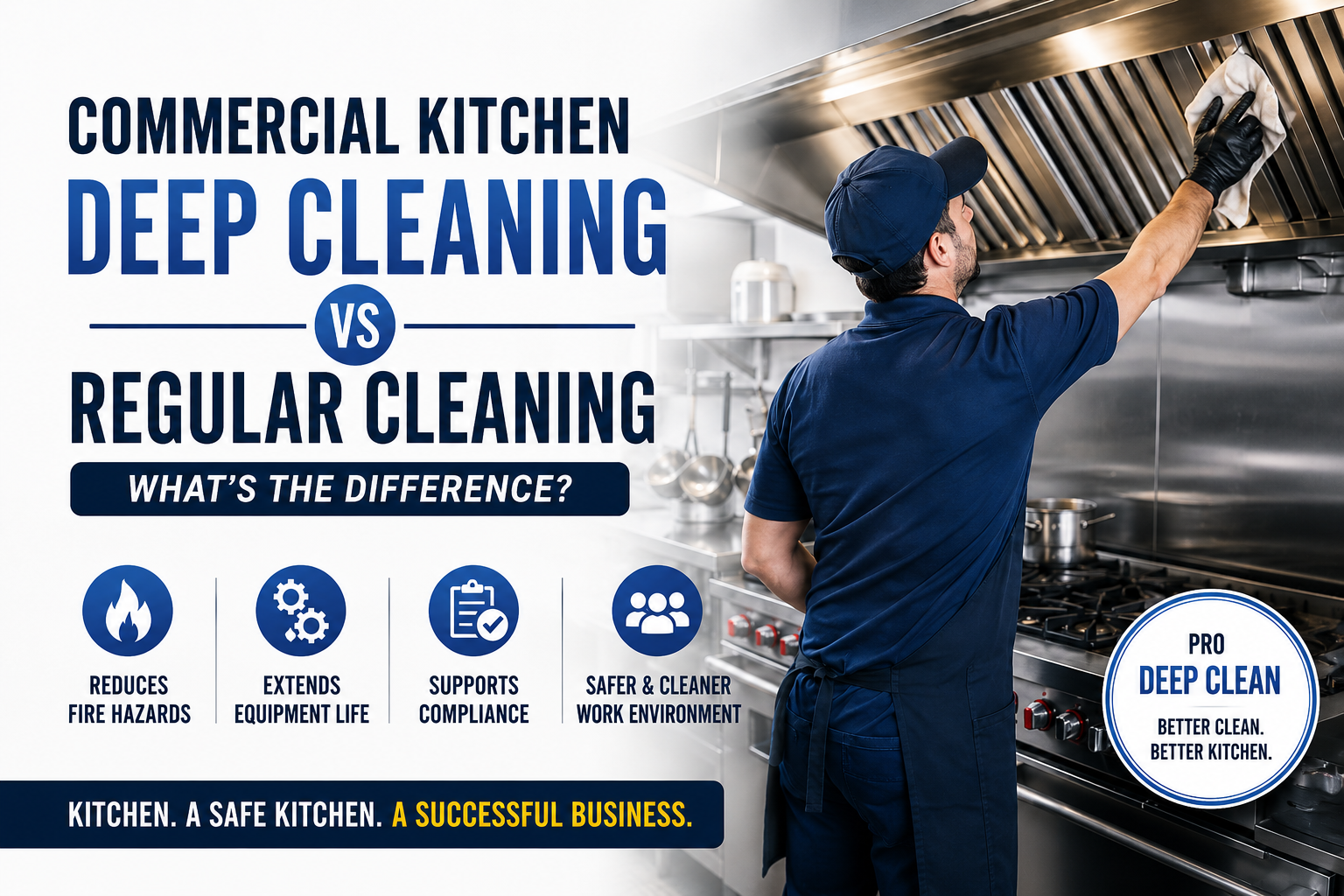
Commercial Kitchen Deep Cleaning vs Regular Cleaning Explained
Commercial Kitchen Deep Cleaning for Better Hygiene & Safety
Get a Free Cleaning QuoteHow Often Should Commercial Kitchens Be Deep Cleaned?
The ideal frequency depends on factors such as:
- Kitchen size
- Cooking volume
- Type of cuisine
- Use of fryers and grills
- Ventilation system usage
High-volume restaurants may require monthly deep cleaning, while smaller operations may schedule quarterly services.
Professional cleaners can assess your kitchen and recommend a suitable cleaning schedule based on your business needs.
Signs Your Commercial Kitchen Needs Deep Cleaning
Some common warning signs include:
- Persistent grease build-up
- Smoke or poor ventilation
- Strong kitchen odours
- Sticky floors and surfaces
- Pest activity
- Reduced equipment performance
- Dirty exhaust filters
- Failed or upcoming health inspections
If you notice any of these issues, it may be time to schedule a professional kitchen deep clean.
Choosing Professional Restaurant Cleaning Services in Melbourne
Hiring experienced professionals ensures your kitchen receives a thorough and compliant cleaning service.
When selecting a commercial kitchen cleaning company, look for:
- Experience with restaurant and hospitality cleaning
- Knowledge of food safety standards
- Specialised cleaning equipment
- Flexible scheduling options
- Fully trained and insured cleaners
- Positive customer reviews
Reliable cleaning professionals can tailor services to suit your kitchen’s operational requirements while minimising downtime. Deep Commercial Cleaning offers professional restaurant cleaning services designed to support compliance, safety, and operational efficiency for Melbourne food businesses.
Final Thoughts
Both regular cleaning and commercial kitchen deep cleaning play an important role in maintaining a safe, hygienic, and compliant food preparation environment. Daily cleaning keeps surfaces tidy and manageable, while professional deep cleaning removes hidden grease, bacteria, and contaminants that standard cleaning may miss.
For restaurants, cafés, hotels, and hospitality venues, combining routine maintenance with scheduled deep cleaning services helps improve workplace safety, extend equipment lifespan, and maintain compliance with food safety regulations.
A professionally cleaned kitchen also creates a healthier environment for staff and delivers a better experience for customers.
Whether you operate a busy restaurant, café, hotel, or food preparation facility, investing in professional kitchen deep cleaning helps protect your staff, customers, and business reputation.
Schedule your professional commercial kitchen cleaning service today and keep your business clean, compliant, and operating at its best all year round.